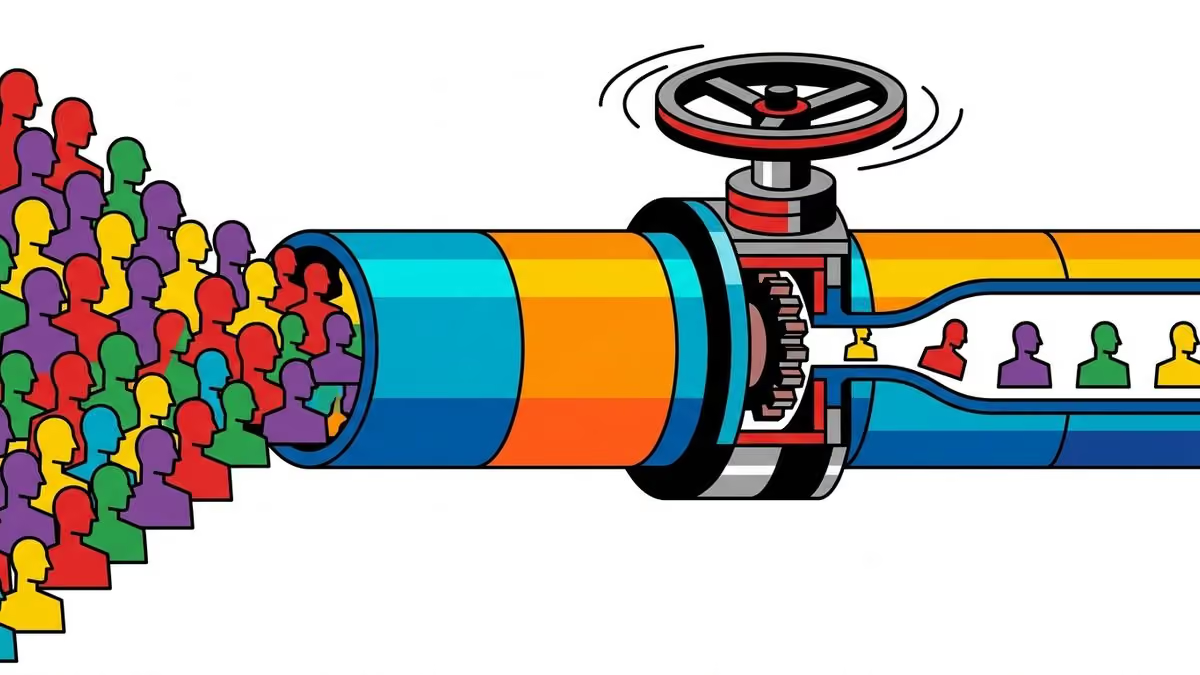
Microsoft's Ayca Bas comes to ISTA 2026 from the gap between an AI demo and a shipped feature
Her published trail is not documentation but hackathons — and the unglamorous business of getting a copilot out of a studio and into Microsoft Teams, where colleagues and their permissions actually are.
There is a moment in every enterprise AI project that no keynote covers. The demo works in the studio. Now it has to run inside Teams, for a tenant with real permissions, real data and a compliance officer.
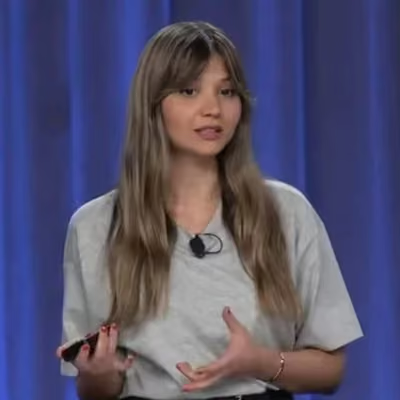
Ayca Bas has spent years publishing about precisely that moment. She joins the ISTA 2026 line-up from Microsoft — her profile is at Ayca Bas.
The trail is the bio
Microsoft’s own developer site describes her arriving via the Developer Experience team, working closely with the MSP and MVP communities, then moving into the Services Apps domain and focusing on Azure App Services, bots, Cognitive Services and IoT. Her listed focus areas since then read like a map of the Microsoft 365 developer surface: Microsoft Graph, Teams, Bot Framework, Power Platform. She holds a double major in electrical and electronics engineering and software engineering, and her earlier work included on-site customer engagement across EMEA.
A note on the job title, since the sources disagree and it would be easy to smooth over: the ISTA line-up lists her as Developer Advocate; Microsoft’s advocates directory lists Cloud Advocate; her byline on the Microsoft 365 Developer Blog reads Senior Cloud Advocate. All three are Microsoft’s own wording at different times.
What she actually publishes
Her author archive on the Microsoft 365 Developer Blog is the useful document, because it shows what she chose to spend her time on rather than what a bio claims.
In July 2024 she announced that bringing a custom engine copilot from Azure OpenAI Studio into Microsoft Teams had reached public preview. That is the exact seam described above — the crossing from a model you have been prompting in a studio to an assistant that lives in the surface your colleagues already have open. Three months later, in October 2024, she was inviting developers into the Microsoft 365 Copilot Developer Camp.
Before the copilot era she was doing the same job on the plumbing: a developer assist dashboard built with Teams Toolkit v5.0 in April 2023, and a Teams Toolkit release for .NET developers that August.
Teaching at hackathon scale
The most telling entries are the ones that are not announcements at all. Across 2023 she ran and documented community hackathons end to end — Hack Together: Microsoft Graph and .NET, with its week-by-week recaps and a winners post in March, then HackTogether: the Microsoft Teams Global Hack, from keynote recap through to the closing note in June. She was also part of the 30 Days of Microsoft Graph challenge.
Running a hackathon well is a distinct skill from giving a talk. It means shipping a learning path that strangers can finish unsupervised, then reading what they got stuck on. It is advocacy measured by whether anyone actually built something — which is a reasonable definition of the job, and a rare one.
Why this matters for Sofia
ISTA’s 2026 programme leans heavily on the practical end of AI delivery: governance, evaluation, what survives contact with production. Bas comes at that from an angle the line-up did not yet have — the platform side, where the API surface, the identity model and the permission prompt decide whether a clever prototype ever reaches a colleague’s desk.
No session has been announced yet. The agenda will carry it when the programme is confirmed.